- April 7, 2026
- by umspcs
- Latest Notifications, News & Updates
- 1780 Views
- 0 Comments
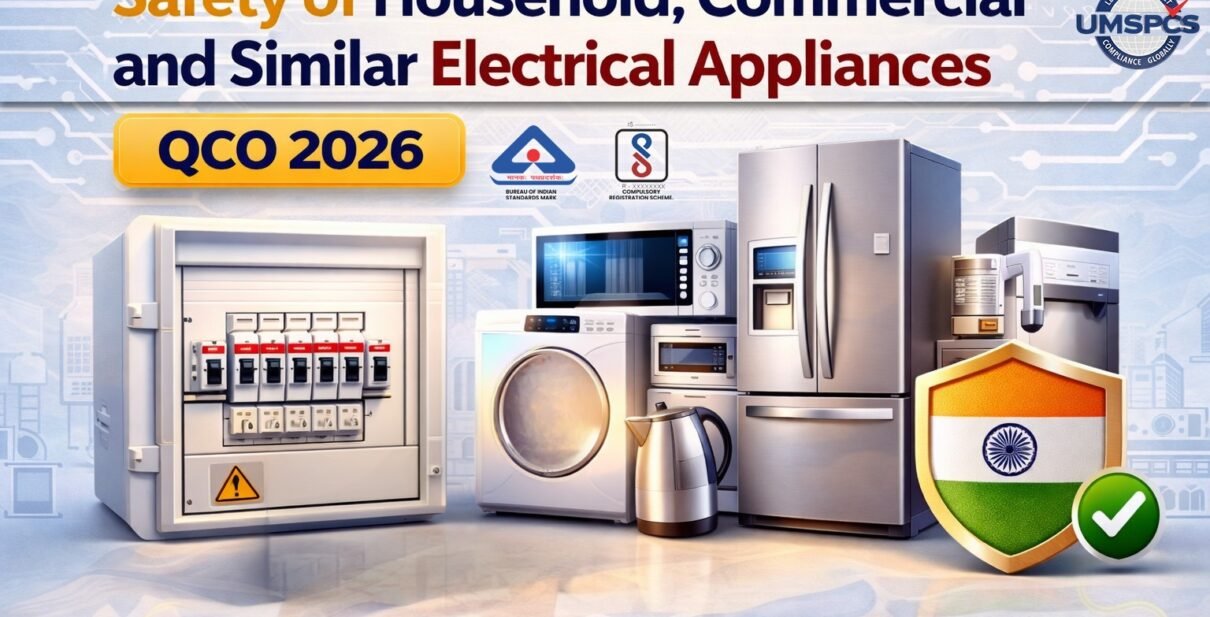
Government Notifies Safety of Electrical Appliances QCO 2026: What It Means for Manufacturers and Consumers
The Government of India has officially notified the Safety of Household, commercial and similar Electrical Appliances (Quality Control) Order, 2026 which is a crucial step towards strengthening product safety and quality standards. The newly upgraded regulation is imposed to reshape how electrical appliances are manufactured, tested, and sold all across the country.
Announced on April 6, 2026 where the order get revised by the earlier 2025 version and imposes solid compliance demands under the management of the Bureau of Indian Standards (BIS).
What Is the Electrical Appliances QCO 2026?
The Electrical Appliances QCO 2026 is a regulatory framework which is in charge of the Bureau of Indian Standards Act, 2016. It is compulsory for a huge range of household and commercial electrical appliances which should align with certain Indian safety standards prior of getting sold into the Indian market.
The order comes into effect from October 1, 2026 by providing manufacturers a transition window to get in line with the upgraded requirements.
At its core, the regulation keeps an eye on the followings:
- Enhancing consumer safety
- Ensuring product reliability
- Eliminating substandard electrical products
Key Highlights of the New QCO
1. Mandatory BIS Certification
Every covered product should have the followings:
Conform to IS 302 (Part 1): 2024 / IEC 60335-1: 2020
This makes the compliance compulsory as per the legal necessity.
2. Voltage Applicability Criteria
The order is applicable to appliances with the followings:
This confirms modular devices such as battery powered appliances which are properly regulated.
Product Coverage Table (As per Official Notification)
A structured table depending upon the official notification for Electrical Appliances QCO 2026 which are mentioned below:
| TABLE | |||||||
| Sl. No. | Goods or articles | Indian Standard | Title of Indian Standard | Date of implementation in general (other than micro andsmall enterprises) | Date of implementation for small enterprises | Date of Implementation for micro enterprises | |
| (1) | (2) | (3) | (4) | (5) | (6) | (7) | |
| All electrical appliance intended for household, | IS 302 (Part 1): | Household | 1st October, 2026 | 1st January, 2027 | 1st April, 2027 | ||
| commercial or similar application with rated voltage | 2024 | and Similar | |||||
| not exceeding 250 V for single-phase appliances and | IEC 60335-1: | Electrical | |||||
| 480 V for other appliances including direct | 2020 | Appliances — | |||||
| current supplied appliances and battery operated | Safety | ||||||
| appliances | Part 1 General | ||||||
| Following list of electrical appliances is given | Requirements | ||||||
| below: | |||||||
| 1. | Vacuum Cleaners and Water Suction Cleaning | ||||||
| Appliances | |||||||
| 2. | Spin Extractors | ||||||
| 3. | Cooking Ranges, Hobs, Ovens and Similar | ||||||
| Appliances | |||||||
| 4. | Electrical Shavers Hair, Clippers and Similar | ||||||
| Appliances | |||||||
| 5. | Tumbler Dryers | ||||||
| 6. | Warming Plates and Similar Appliances | ||||||
| 7. | Frying Pans, Deep Fat Fryers and similar | ||||||
| appliances | |||||||
| 8. | Appliances for Heating Liquids | ||||||
| 9. | Massage Appliances | ||||||
| 10. | Electric Forced Convection Ovens, Steam | ||||||
| Cookers and Steam-Convection Ovens | |||||||
| 11. | Electric Heating Tools | ||||||
| 12. | Electric Steam Cookers | ||||||
| 13. | Insect Killers | ||||||
| 14. | Electric Call Bells and Buzzers for Indoor Use | ||||||
| 15. | Electric Water Boilers | ||||||
| 16. | Electric Coffee Makers | ||||||
| 17. | Electric Bean Slicers | ||||||
| 18. | Electric Berry-juice Extractors | ||||||
| 19. | Electric Can Openers | ||||||
| 20. | Electric Centrifugal Juicers | ||||||
| 21. | Electric Churns | ||||||
| 22. | Electric Citrus-fruit Squeezers | ||||||
| 23. | Electric Coffee Mills not exceeding 500g | ||||||
| hopper capacity | |||||||
| 24. | Electric Cream Whippers | ||||||
| 25. | Electric Egg Beaters | ||||||
| 26. | Electric Food Processors | ||||||
| 27. | Electric Grain Grinders not exceeding 3l | ||||||
| hopper capacity | |||||||
| 28. | Electric Graters | ||||||
| 29. | Electric Ice-Cream Machines, including those for | ||||||
| use in refrigerators and freezers | |||||||
| 30. | Electric Knife Sharpeners | ||||||
| 31. | Electric Knives | ||||||
| 32. | Electric Noodle Makers | ||||||
| 33. | Electric Potato Peelers | ||||||
| 34. | Electric Shredders | ||||||
| 35. | Electric Sieving Machines | ||||||
| 36. | Slicing Machines | ||||||
| 37. | Electric Hot Plates | ||||||
| 38. | Single Walled Baking Ovens | ||||||
| 39. | Low Speed Food Grinding Machines | ||||||
| 40. | Dishwashers | ||||||
| 41. | Floor Treatment Machines and Wet Scrubbing | ||||||
| Machines | |||||||
| 42. | Food Waste Disposers | ||||||
| 43. | Blankets, Pads, Clothing and Similar Flexible | ||||||
| Heating Appliances | |||||||
| 44. | Appliances for Skin Exposure to Optical | ||||||
| Radiation | |||||||
| 45. | Commercial Electric Cooking Ranges, Ovens, | ||||||
| Hobs and Hob Elements | |||||||
| 46. | Commercial Electric Doughnut Fryers and | ||||||
| Deep Fat Fryers | |||||||
| 47. | Commercial Electric Griddles and Griddle Grills | ||||||
| 48. | Commercial Electric Multi-purpose Cooking Pans | ||||||
| 49. | Commercial Electric Forced ConvectionOvens, Steam Cookers and Steam-Convection Ovens | ||||||
| 50. | Clothes Dryers and Towel Rails | ||||||
| 51. | Commercial Electric Boiling Pans | ||||||
| 52. | Commercial Electric Grillers and Toasters | ||||||
| 53. | Commercial Electric Appliances for keeping Food and Crockery Warm | ||||||
| 54. | Commercial Electric Bains-Marie | ||||||
| 55. | Oral Hygiene Appliances | ||||||
| 56. | Sauna Heating Appliances and Infrared Cabins | ||||||
| 57. | Surface-Cleaning Appliances for Household use Employing Liquids or Steam | ||||||
| 58. | Electrical Appliances for use with Aquariums and Garden Ponds | ||||||
| 59. | Commercial Electric Dishwashing Machines | ||||||
| 60. | Whirlpool Baths and Whirlpool Spas | ||||||
| 61. | Thermal Storage Room Heaters | ||||||
| 62. | Commercial Electric Rinsing Sinks | ||||||
| 63. | Commercial Electric Kitchen Machines | ||||||
| 64. | Air-Cleaning Appliances | ||||||
| 65. | Water-Bed Heaters | ||||||
| 66. | Fixed Immersion Heaters | ||||||
| 67. | Outdoor Barbecues | ||||||
| 68. | Foot Warmers and Heating Mats | ||||||
| 69. | Amusement Machines and Personal Service Machines | ||||||
| 70. | Toilet Appliances | ||||||
| 71. | Fabric Steamers | ||||||
| 72. | Drives for Vertically Moving Garage Doors for Residential Use | ||||||
| 73. | Humidifiers | ||||||
| 74. | Commercial Electric Hoods | ||||||
| 75. | Vaporizers | ||||||
| 76. | Gas, Oil and Solid-Fuel Burning Appliances Having Electrical Connections | ||||||
| 77. | Electrolysers | ||||||
| 78. | Beauty Care Appliances Incorporating Lasers and Intense Light Sources | ||||||
| 79. | Personal-e-Transporters | ||||||
| 80. | Skin Beauty Care Appliances | ||||||
| 81. | Furniture with Electrically Motorized Parts | ||||||
| 82. | Commercial Vacuum Packaging Appliances | ||||||
| 83. | Hand held electric Engraving Tools | ||||||
| 84. | DC supplied/ battery-operated vacuum cleaners | ||||||
| 85. | DC supplied/ battery-operated shavers, trimmers, clippers and similar appliances | ||||||
| 86. | DC supplied/ battery-operated Massage appliances | ||||||
| 87. | DC supplied/ battery-operated blenders, juicers | ||||||
| 88. | DC supplied/ battery-operated toothbrush and other oral hygiene appliances | ||||||
| 89. | DC supplied/ battery-operated foot warmer and heating mats | ||||||
| 90. | DC supplied/ battery-operated air purifier | ||||||
Implementation Timeline
- 1 October 2026 – Mandatory for large manufacturers
- 1 January 2027 – Applicable to small enterprises
- 1 April 2027 – Applicable to micro enterprises
Important Exemptions
The government has offered practical exemptions which are mentioned below:
- Export-only products are excluded
- Up to 200 units/year for R&D purposes are allowed without certification
- Existing stock can be sold for 6 months after implementation with declaration
Such exemptions confirm flexibility while handling safety standards as per accordance.
Role of BIS in Certification and Enforcement
The Bureau of Indian Standards works as follows:
- Certification authority
- Enforcement authority
Non-compliance may result in the followings:
- Legal penalties
- Product bans
- Action under BIS Act
UMSPCS is trusted one of the best Bis Consultant services provider, we help you to get ISI Mark Certification for Electric Appliances.
Why This QCO Matters
For Consumers
This regulation improves everyday safety as given below:
For Manufacturers
The regulation sets at both pressure and potential, as follows:
Challenges:
Industry Impact: A Step Toward Standardization
The Electrical Appliances QCO 2026 aims to the followings:
- Standardize product quality
- Align with global safety norms
- Strengthen consumer trust
This is an essential step towards boosting safety and reliability among electronics ecosystems in India.
What Businesses Should Do Next
Action Checklist:
- Identify applicable products
- Check relevant IS standards
- Start BIS certification early
- Ensure testing compliance
Conclusion
UMSPCS is a trusted name in regulatory compliance and BIS certificate services in India. We assist businesses to track difficult approval procedures efficiently in accordance with many years of experience.
Services Offered
- Complete ISI certification support
- Documentation and application filing
- Product testing coordination
- Factory inspection assistance
Frequently Asked Questions (FAQs)
It is a government order which mandates safety standards and BIS certification for electrical appliances to get sold into the Indian market.
This came into effect from 1 October 2026 in line with comprehensive deadlines for small and micro businesses.
Yes. Every mentioned product should get certified by the Bureau of Indian standards and should display the ISI mark to assure trust and safety among consumers.
The order consists of 90+ appliances under this QCO which consist of kitchen devices, cleaning machines, and personal care products.
Yes. The regulation is also applicable to battery operated and DC powered appliances within the defined voltage limits.
Yes. export only product and limited R&D imports which is up to 200 units per year are exempt
Non compliance can give results to fines, product seizure, lawsuits under the BIS Act, 2016.
BIS Certification confirms proper ISI marking prior to selling into the Indian market where manufacturers should get test products in BIS approved labs only.
❓ Ask a Question
Have any doubts? Fill the form below and our team will respond shortly.