
EPR Registration for Used Oil - Fast & Hassle-Free Approval
In India, the management of used oil has become an essential environmental and regulatory concern. In accordance with growing industrialisation and increased consumption of lubricants, engine oil, and industrial oils, the generation of harmful oil waste has notably increased. The government of India has imposed the EPR Registration for used oil, which makes it compulsory for businesses to hold responsibility for the disposal and recycling of oil waste.
At UMSPCS, we provide complete EPR registration for used oil and compliance services, which assist businesses across India to align with regulatory obligations seamlessly and efficiently. Our workforce of experts confirms that your organisation stays completely compliant in line with CPCB norms while concentrating on sustainability and environmental responsibility.
What is EPR Registration for Used Oil?
- Reduce environmental pollution caused by used oil
- Reduce environmental pollution caused by used oil
- Ensure safe handling and disposal of hazardous waste
- Ensure safe handling and disposal of hazardous waste
Used oil consists of any petroleum-based or synthetic oil that can be used and contaminated through physical or chemical impurities.
Get Your Free Expert Consultation
Types of Oil Covered Under EPR
- Engine oil
- Hydraulic oil
- Transformer oil
- Lubricating oil
- Gear oil
- Compressor oil
- Turbine oil
- Industrial oil
- Grease and synthetic oil
They become harmful and should be managed as per CPCB guidelines after such oils are used.
Why EPR Registration for Used Oil is Important?
Environmental Risks:
Health Risks:
Economic Impact:
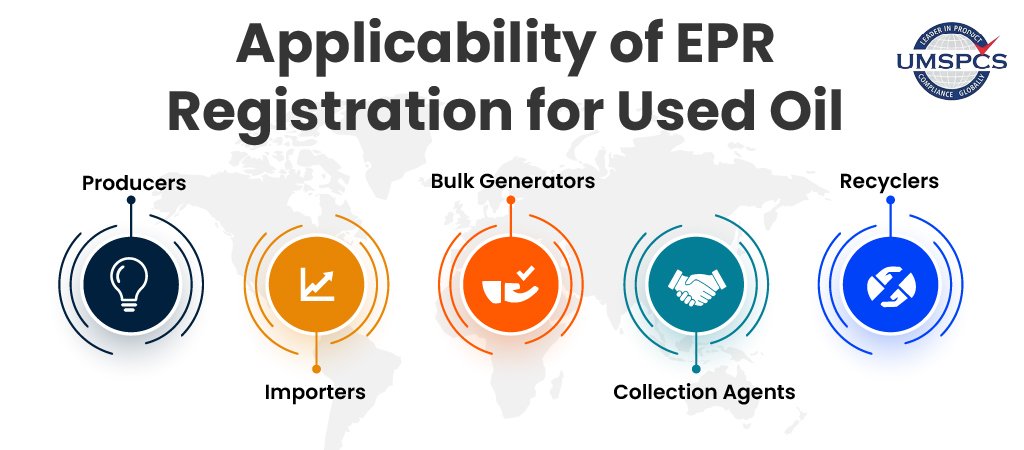
Applicability of EPR Registration for Used Oil
1. Producers
- Manufacturers of base oil and lubricants
- Companies selling oil under their brand name
2. Importers
- Businesses importing oil products into India
3. Bulk Generators
- Industries generating large quantities of used oil
4. Collection Agents
- Entities responsible for collecting used oil
5. Recyclers
- Businesses involved in re-refining or processing used oil
Every such entity should register on the CPCB portal and align with EPR requirements.
Industries Covered Under EPR Registration for Used Oil
- Automotive industry
- Manufacturing sector
- Power plants
- Oil refineries
- Engineering companies
- Logistics companies
Key Compliance Requirements Under EPR Registration for Used Oil
CPCB Registration
EPR Targets
EPR Certificates
Record Maintenance
Return Filing
Safe Disposal and Recycling
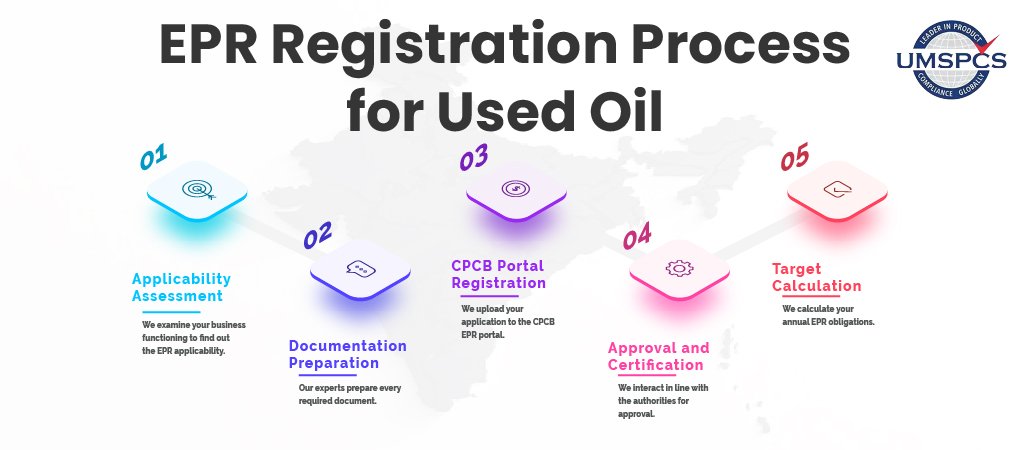
Complete Process of EPR Registration for Used Oil
Step 1: Applicability Assessment
Step 2: Documentation Preparation
Step 3: CPCB Portal Registration
Step 4: Approval and Certification
Step 5: Target Calculation
Step 6: Compliance Management
EPR Registration Fees for Used Oil
| S. No. | Sale of Base Oil/Lubrication Oil (MTPA) | Registration Fees Amount (INR) |
|---|---|---|
1 |
> 1,00,000 MT |
10,00,000 |
2. |
> 50,000 – 1,00,000 MT |
5,00,000 |
3. |
> 10,000 – 50,000 MT |
2,00,000 |
4. |
5000-10,000 MT |
50,000/- |
5. |
< 5000 MT |
25,000 |
This service includes CPCB portal registration, documentation support, and application submission.
EPR Registration for Used Oil is typically completed within 60-70 days, subject to regulatory approval and document readiness. Additional charges may apply for EPR certificates and ongoing compliance services.
Documents Required for EPR Registration for Used Oil
- ID and Address Proof of the Authorised Persons
- Business Registration (CIN, MoA, Partnership Deed, MSME, etc.)
- PAN and GST Details
- Import Export Code
- Details of Manufacturing
- EPR Plan to fulfil the targets
- Details Regarding the Annual Returns
- Data Regarding the Generation of Used Oil
Benefits of Oil Waste EPR Compliance
- Legal Compliance: Prevent penalties and regulatory complications.
- Environmental Protection: Encourage responsible waste management.
- Improved Brand Image: Boost trust among customers and stakeholders.
- Business Growth: EPR compliance is usually required for tenders and partnerships.
- Resource Efficiency: Promotes recycling and reuse of oil.
Challenges in Used Oil EPR Compliance
- Complex regulatory requirements
- Documentation errors
- Difficulty in finding authorised recyclers
- Managing EPR targets
- Time-consuming compliance processes
Penalties for Non-Compliance Used Oil EPR
- Environmental compensation charges
- Suspension of business operations
- Cancellation of registration
- Legal action
Compliance is compulsory and cannot be ignored. Also get to know more about EPR Registration for Battery Waste Management.
Oil Waste EPR vs Other EPR Categories
| Category | Waste Type | Industries |
|---|---|---|
Plastic EPR |
Plastic waste |
FMCG |
E-Waste |
EPR Electronics |
IT sector |
Battery EPR |
Batteries |
Automotive |
Oil Waste EPR |
Used oil |
Industrial |
Impact of Used Oil on the Environment
- Pollute millions of litres of water
- Destroy soil fertility
- Harm wildlife
- Cause fire hazards
Future of EPR Registration for Used Oil in India
- Stricter compliance regulations
- Increased recycling targets
- Digital monitoring systems
- Circular economy initiatives
Why Choose UMSPCS for Used Oil EPR?
- Industry Expertise: Detailed understanding of CPCB regulations.
- End-to-End Solutions: From registration to compliance management.
- Fast Processing: On-time turnaround.
- Customised Approach: Solutions as per your business needs.
- Transparent Pricing: No hidden charges.
- Dedicated Support: Expert guidance at every step.
Our EPR Registration for Used Oil Services
Services regarding Oil Waste EPR are as follows:
- EPR registration
- CPCB portal filing
- Documentation support
- EPR target calculation
- Certificate procurement
- Return filing
- Compliance audits
- Regulatory advisory
How UMSPCS Supports the Used Oil EPR Journey
- Continuous compliance monitoring
- Timely updates on regulations
- End-to-end documentation support
- Dedicated account managers
Conclusion
- Meets all regulatory requirements
- Avoids penalties
- Operates sustainably
Frequently Asked Questions (FAQs)
Oil Waste EPR (Extended Producer Responsibility) is a regulatory system that makes producers, importers, and brand owners responsible for the collection, recycling, and safe disposal of used oil generated from their products. It ensures environmentally sound management of hazardous oil waste.
Yes, registration on the Central Pollution Control Board (CPCB) portal is mandatory for all applicable entities. Without registration, businesses cannot legally operate in the oil supply chain.
EPR targets refer to the minimum quantity of used oil that must be recycled each year. These targets are based on the quantity of oil sold or imported and increase gradually over time as per government regulations.
An EPR certificate is a digital document issued by registered recyclers as proof of recycling a certain quantity of used oil. Businesses purchase these certificates to meet their EPR targets.
The registration process typically takes a few weeks, depending on the accuracy of documents and the approval timeline of CPCB.
Yes, any business that falls under the applicable categories (producer, importer, or brand owner) must register, regardless of size. Compliance is based on activity, not company size.