
Battery Waste EPR: Complete Compliance Guide for Businesses in India
India’s sudden shift towards electrification, digital devices, and electric mobility has notably increased demand for batteries. Batteries are now an essential component of modular life, from smartphones and laptops to electric vehicles and industrial systems. However, in accordance with this growth comes a severe challenge, which is Battery waste management.
Improper disposal of batteries can release harmful materials like lead, lithium, mercury, and cadmium into the environment, which leads to soil contamination, water pollution, and health risks. The government of India imposed the Battery Waste Management Rules, 2022, which make Extended Producer Responsibility (EPR) compulsory for businesses to address this issue.
You are lawfully required to align with Battery Waste EPR regulations when your company manufactures, imports, distributes, or sells batteries or battery-operated products.
At UMSPCS, we assist businesses across India to get seamless, fast, and complete compliant Battery Waste EPR registration, which confirms that they fulfil every regulatory demand without any stress.
What is Battery Waste EPR?
Battery Waste EPR is a regulatory framework that holds the responsibility of producer accountability for the whole lifecycle of batteries, consisting of their collection, recycling, and disposal.
This system has the following:
- Producers must ensure the collection of used batteries
- Waste batteries must be sent to authorised recyclers or refurbishers
- Recycling and recovery targets must be achieved
- Proper documentation and reporting must be maintained
The concept depends on the “Polluter Pays Principle”, which confirms that those who impose batteries into the market hold the responsibility for their environmental impact.
Get Your Free Expert Consultation
Why Battery Waste EPR is Important
- Environmental Protection: Improper disposal of batteries can result in soil and water contamination because of harmful chemicals.
- Resource Conservation: Recycling supports recovering valuable materials like lithium, cobalt, and nickel, which minimises dependency on raw materials.
- Legal Compliance: Non-compliance can result in fines, environmental compensation and even business limitations.
- Business Reputation: Sustainable practice enhances brand credibility and trust among consumers.
Legal Framework: Battery Waste Management Rules, 2022
Key Highlights
-
Applicable to all types of batteries
○ Electric Vehicle (EV) Batteries
○ Portable Batteries
○ Automotive Batteries
○ Industrial Batteries - Mandatory EPR registration with CPCB
- Prohibition of landfilling and incineration
- Introduction of the EPR certificate system
- Defined collection and recycling targets
- Mandatory use of recycled materials in new batteries
Such rules aim to establish a circular economy where battery materials are reused and recycled rather than being discarded.
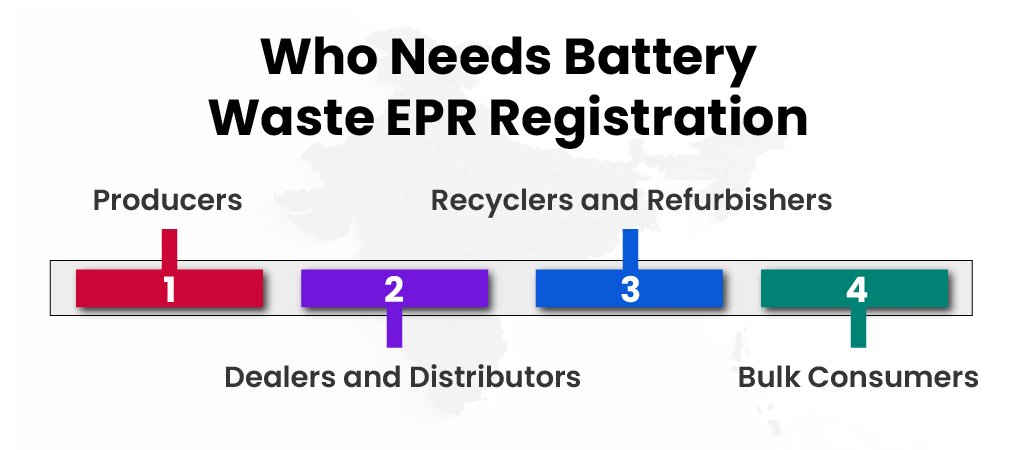
Who Needs Battery Waste EPR Registration?
1. Producers
2. Dealers and Distributors
3. Recyclers and Refurbishers
4. Bulk Consumers
Scope of Battery Waste EPR Covered
- Used batteries
- Discarded batteries
- Expired batteries
- Damaged batteries
It consists of every battery chemistry and category, which makes the rule detailed and future-ready.
Key Responsibilities Under Battery Waste EPR
1. Collection of Waste Batteries
2. Recycling and Refurbishment
3. Meeting EPR Targets
4. Use of Recycled Materials
5. Documentation and Reporting
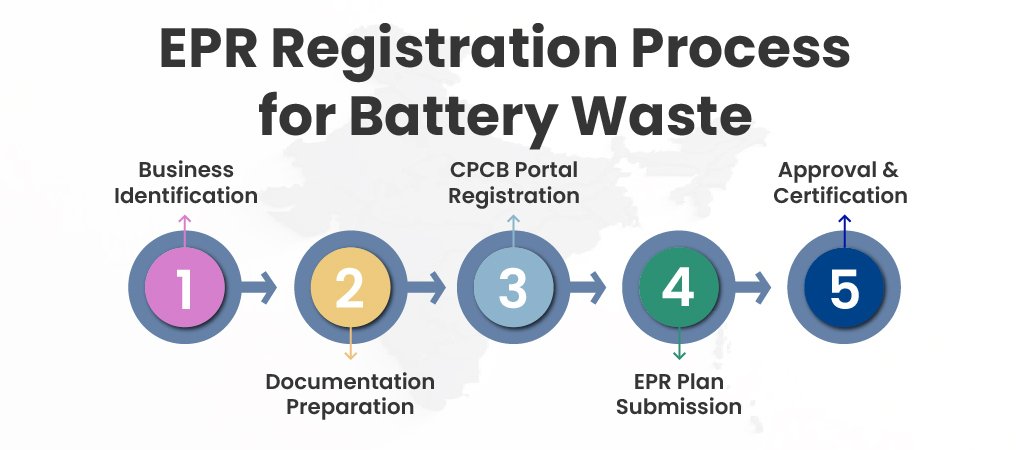
EPR Registration Process for Battery Waste
Step 1: Business Identification
Step 2: Documentation Preparation
Step 3: CPCB Portal Registration
Step 4: EPR Plan Submission
Step 5: Approval & Certification
EPR Certificates System Explained
One of the most essential features of Battery Waste EPR is the EPR Certificate Mechanism.
- Recyclers generate EPR certificates based on recycling performance
- Producers purchase these certificates to meet compliance targets
- The system ensures transparency and accountability
This mechanism makes a market-oriented approach to recycling compliance.
Cost Structure for Battery Waste EPR Compliance
The registration charges for Battery Waste EPR are given below:
| Annual Revenue of Company | Registration Fee (₹) | Notes |
|---|---|---|
| Less than ₹5 crore | ₹10,000 | For small importers / new entities |
| ₹5 crore to ₹50 crore | ₹20,000 | Most mid-size importers fall here |
| Above ₹50 crore | ₹40,000 | Large producers / brands |
The final pricing might differ on the basis of various factors, such as the following:
- Scale and type of your business
- Quantity of batteries introduced into the market
- Level of compliance support required
- Overall scope of services
At UMSPCS, we ensure transparency in pricing with no hidden charges, providing affordable solutions for a seamless and stress-free registration procedure.
Challenges in Battery Waste EPR Compliance
- Complex Documentation: Knowing regulatory requirements can be difficult.
- Tracking and Reporting: Handling appropriate data for CPCN, which reports the requirements of systems and expertise.
- Finding Authorised Recyclers: Only registered recyclers can be employed.
- Meeting Targets: Getting collection and recycling targets can be difficult without having proper planning.
- Risk of Penalties: Non compliance can result in environmental compensation and legal actions.
Battery Waste EPR Penalties for Non-Compliance
- Environmental compensation charges
- Cancellation of registration
- Legal action under Environment Protection Act
- Business operation restrictions
How UMSPCS Helps with Battery Waste EPR Compliance
Why Choose UMSPCS?
- Expert Knowledge: UMSPCS has a deep knowledge of environmental laws and CPCB compliance requirements.
- End-to-End Services: They assist with the following:
- EPR registration
- Documentation
- CPCB portal handling
- Compliance reporting
- Customised Solutions: Every business alters its compliance strategies depending upon its operations.
- Fast & Hassle-Free Process: UMSPCS confirms seamless approval in line with minor postponements.
- Ongoing Compliance Support: They offer ongoing assistance for the following:
- Filing returns
- Maintaining records
- Meeting EPR targets
Services Offered by UMSPCS for Battery Waste EPR
- EPR Registration: Complete assistance for CPCB registration procedure.
- Documentation Assistance: Preparation and verification of every required document
-
EPR Plan Development: Strategic planning for the following:
● Collection
● Recycling
● Compliance targets - Recycler Coordination : Connecting in line with official recyclers.
- Annual Compliance Filing: On time submission of outcomes and returns.
- Audit Support: Support during inspections and audits.
Benefits of Hiring a Professional EPR Consultant
- Saves time and effort
- Reduces risk of rejection
- Ensures 100% compliance
- Keeps your business legally secure
- Improves operational efficiency
Future of Battery Waste Management in India
- Electric mobility
- Renewable energy storage
- Sustainable manufacturing
In accordance with this growth, where battery usage is increasing significantly making EPR compliance very critical.
The government also consist of the following:
- Increasing recycling targets
- Promoting circular economy
- Encouraging eco-friendly practices
Businesses which get aligned early will get a competitive benefit. Get to know more about EPR Registration for Plastic Waste.
Best Practices for Battery Waste EPR Compliance
- Maintain accurate inventory records
- Partner with authorised recyclers
- Monitor EPR targets regularly
- Use digital tools for tracking
- Work with experienced consultants like UMSPCS
Conclusion
Battery Waste EPR is not only a regulatory requirement, but it is an essential step towards environmental sustainability and holds the responsibility of business practices.
In accordance with strict rules under the Battery Waste Management Rules, 2022, businesses should confirm proper collection, recycling, and reporting of battery waste. Non-compliance can result in heavy fines and reputational damage.
By working with a reliable consultancy like UMSPCS, businesses can simplify the whole procedure, which confirms compliance and concentrates on growth.
Now is the time to work and secure your Battery Waste EPR registration when your company works with batteries or battery-operated products.
Looking for stress-free battery waste EPR compliance?
- Fast registration
- Complete documentation
- Ongoing compliance support
Frequently Asked Questions (FAQs)
Battery Waste EPR (Extended Producer Responsibility) is a regulatory requirement under the Battery Waste Management Rules, 2022, where producers are responsible for the collection, recycling, and safe disposal of batteries they introduce into the market.
Battery Waste EPR registration is mandatory for producers, importers, brand owners, dealers, recyclers, refurbishers, and bulk consumers involved in manufacturing, selling, or handling batteries in India.
Yes, importers of batteries or battery-operated products must obtain EPR registration before selling or distributing products in the Indian market.
Battery Waste EPR applies to all types of batteries, including lithium-ion, lead-acid, nickel-cadmium, portable batteries, electric vehicle batteries, and industrial batteries.
The Central Pollution Control Board (CPCB) is responsible for granting EPR registration, monitoring compliance, maintaining records, and ensuring that businesses follow the Battery Waste Management Rules.
EPR targets refer to the minimum quantity of battery waste that producers must collect and recycle annually as per government guidelines. These targets increase gradually over time.
EPR certificates are issued by authorised recyclers based on the amount of battery waste they process. Producers can purchase these certificates to meet their compliance obligations.
Key documents include the company registration certificate, PAN, GST details, product details, import/export data (if applicable), and an EPR plan outlining waste management strategies.
Non-compliance can result in penalties such as environmental compensation fines, cancellation of registration, legal action, and restrictions on business operations.
The timeline may vary depending on documentation and application accuracy, but with proper guidance, the process can typically be completed within a few weeks.
Yes, businesses can appoint authorised consultants or Producer Responsibility Organisations (PROs) to manage EPR compliance, including registration, documentation, and reporting.