
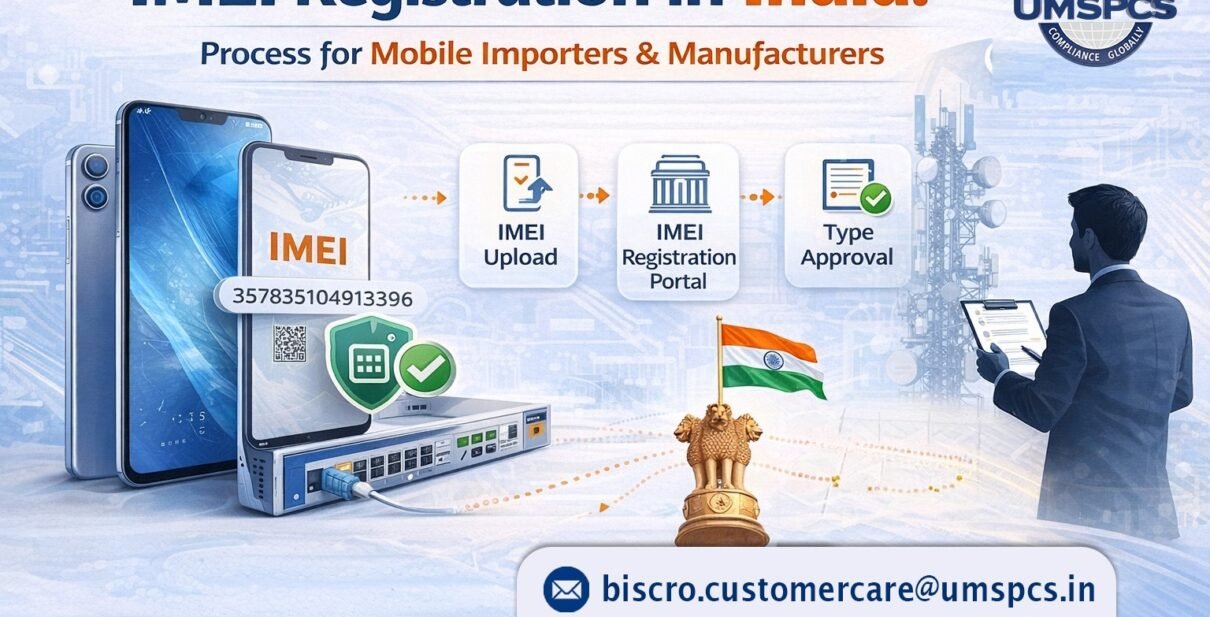
In India’s excessive growing telecom and electronics market where regulatory compliance has become an essential requirement for businesses who are working in mobile devices. One among such necessary compliance is IMEI Registration which confirms that each mobile devic in the country is traceable, secure, and authentic.
The Government of India has created the IMEI Registration compulsory for manufacturers, importers, and brand owners in accordance with the increasing cases of counterfeit devices and IMEI tampering. This blog demonstrates the whole IMEI registration process, required documents, and how businesses confirm seamless compliance.
What is IMEI and Why is It Important?
IMEI (International Mobile Equipment Identity) has a separate 15 digit number assigned to each mobile device. It works as a digital identity of the device and assists telecom operators and authorities to navigate and check mobile phones.
In India, IMEI works as an essential role in the followings:
- Preventing counterfeit and cloned devices
- Tracking stolen or lost phones
- Enhancing telecom security
- Ensuring only genuine devices operate on networks
The government uses the Central Equipment Identity Register (CEIR) system to handle a centralized database of IMEI numbers which allows workers to block or whitelist devices efficiently.
Legal Requirement for IMEI Registration in India
As per the Department of Telecommunications (DoT) regulations where IMEI registration is compulsory for the followings:
- Mobile manufacturers (domestic and international)
- Importers of mobile devices
- Brand owners and OEMs
- Businesses importing devices for testing or R&D
Manufacturers should register an IMEI number prior to their first sale and importers should register them prior to importing devices into India.
Failing to compliance can give result in the followings:
- Blocking of devices on telecom networks
- Legal penalties
- Business disruptions
What is the Device Setup (ICDR) Portal?
IMEI registration in India is completed by the Device Setup (ICDR) Portal which is an online platform developed by the Department of Telecommunications.
This system allows the followings:
- Registration of device models
- Uploading of IMEI numbers
- Generation of IMEI certificates
- Compliance tracking for import and manufacturing
The ICDR system confirms that only verified and compliant devices can get into the Indian market.
IMEI Registration Process for Importers
The process is structured and should get completed prior of custom clearance as given below:
Step 1: Company Registration on ICDR Portal
Importers should first register their company on the ICDR portal in line with the valid business credentials.
Step 2: Create CHA and Importer Profile
- CHA (Custom House Agent) details are added
- Importer profile is created
Step 3: OEM Registration
The original equipment manufacturer (OEM) details which should get registered when unavailable.
Step 4: Device Model Registration
Every mobile device model should get registered in line with specification like the followings:
- Brand name
- Model number
- Technical details
Step 5: IMEI Number Upload
Submit IMEI numbers in bulk as per the required format.
Step 6: IMEI Certificate Generation
The system made an IMEI certificate which is in demand for import clearance once getting verified successfully.
IMEI Registration Process for Manufacturers
The process is a bit differ but is required for Indian manufactures:
Step 1: Register on ICDR Portal
Manufacturers should make an account in line with company information.
Step 2: OEM Creation
Register as OEM when not mentioned.
Step 3: Model Registration
Every device model should get registered prior to production or sale of the product.
Step 4: IMEI Allocation & Upload
IMEI number which is granted through GSMA approved bodies should get assigned and uploaded.
Step 5: Certificate Generation
The IMEI certificate is made which allows legal sale of devices in India once getting validated.
Documents Required for IMEI Registration
To confirm seamless approval where businesses should prepare the following documents:
- Company incorporation certificate
- GST registration
- Import Export Code (IEC)
- Authorization letter (if applicable)
- Product details and specifications
- OEM agreement (for importers)
- IMEI database (in prescribed format)
Accurate documentation minimises postpones and confirms quick approvals.
Key Benefits of IMEI Registration
IMEI registration offers several advantages for businesses and consumers:
1. Legal Compliance
Confirms stickiness to DoT regulations and prevents fines.
2. Market Access
Compulsory for selling or importing mobile devices in India.
3. Brand Trust
Boosts credibility by confirming genuine products.
4. Device Security
Helps in avoiding duplication and counterfeit devices.
5. Consumer Protection
This enables the users to check device authenticity and prevent scams.
Challenges Faced by Businesses
Businesses often face difficulties regarding IMEI registration which are as follows:
- Technical errors in IMEI data upload
- Documentation mismatches
- Delays in approval
- Lack of understanding of portal procedures
This is why several businesses want professional consultancy services to manage the process efficiently.
Read more also: BIS-ISI Certificate for Indian Manufacturer
How UMSPCS Helps in IMEI Registration
UMSPCS is a reliable consultancy firm which offers complete assistance for IMEI registration and other telecom certification when it comes to regulatory compliance also and expert guidance can make a clear difference.
Why Choose UMSPCS?
- Expert knowledge of DoT and telecom regulations
- Complete documentation support
- Fast and error-free application processing
- Assistance with ICDR portal registration
- Dedicated support for importers and manufacturers
900+ certification in more than 6 years of experience. where UMSPCS confirms smooth and stress free IMEI registration process for businesses over India.
Best Practices for Smooth IMEI Registration
Follow these best practices to prevent postpones and denials:
- Ensure IMEI numbers are genuine and GSMA-approved
- Double-check data before uploading
- Maintain proper documentation
- Register devices before import or sale
- Seek expert assistance if needed
Read more also: TEC Certification for Telecom Equipment: Process & Documents
Conclusion
IMEI registration is not only a regulatory requirement but an essential step towards confirming security, authenticity, and clarity in India’s telecom ecosystem. Manufacturers and importers should prioritize compliance to prevent legal obstacles in accordance with rigid government regulations and increase scrutiny.
As we understand the procedure by working together with experienced consultants like UMSPCS where we streamline businesses to get IMEI registration journey simple and can concentrate on the growth in today’s competitive Indian market.
FAQs
1. Is IMEI registration mandatory in India?
Yes, it is mandatory for all mobile device manufacturers and importers before sale or import.
2. Which portal is used for IMEI registration?
The Device Setup (ICDR) portal is used for IMEI registration in India.
3. Who regulates IMEI registration in India?
The Department of Telecommunications (DoT) regulates IMEI registration.
4. What happens if IMEI is not registered?
Devices may be blocked from telecom networks and legal action may be taken.
5. How long does IMEI registration take?
Typically, it takes a few days depending on documentation and approval.
6. Can foreign manufacturers apply for IMEI registration?
Yes, through an authorized Indian importer or representative.
7. Is IMEI required for prototype devices?
Yes, even devices for testing or R&D must be registered.
8. How can UMSPCS help with IMEI registration?
UMSPCS provides complete consultancy, documentation, and end-to-end support for smooth and fast registration.
❓ Ask a Question
Have any doubts? Fill the form below and our team will respond shortly.