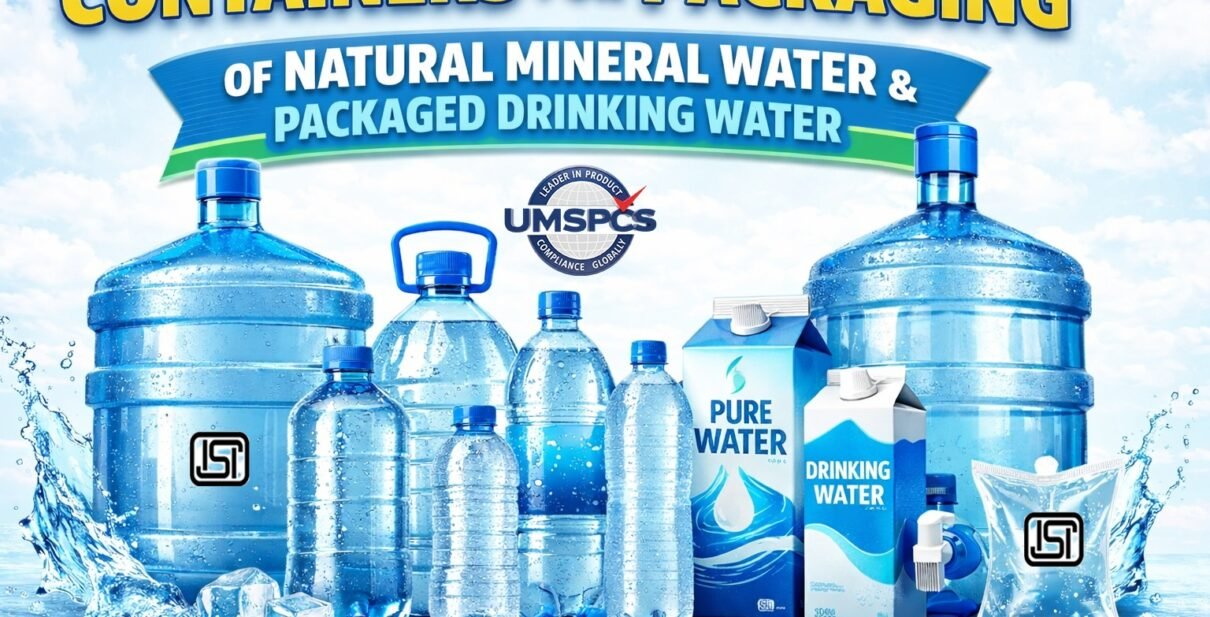
The packaging possesses an immediate effect on product security, reliability, and compliance in the bottled water industry, which means it’s more than simply concerned about the appearance. The Indian Standard IS 15410, which defines security and quality standards for plastic bottles that should be aligned with the bottles that are utilised in India for storing packaged water for drinking and pure water.
In order to make sure approval from regulators and trust among the consumers, producers, packaged sellers, and water plant managers, they should have BIS Certification for Water Packaging Containers in India.
What is the BIS Certification and its importance
The Bureau of Indian Standards (BIS) is India’s national standards body that gives the ISI mark used for quality certification. It verifies its compliance with the essential Indian Standards (IS) and provides security and quality in India. Only BIS certification can indicate a product level in accordance with Indian performance, safety and technical standards.
BIS certification is important because it follows:
- As it indicates that the product satisfies safety and quality standards,
- Many product categories are mandated by law to carry it, such as toys, industrial equipment, electronics, and IT products.
- It improves the credibility of brands and boosts consumer trust.
- It serves to avoid fines, difficulties with import/export, and shipment denials.
What is the IS 15410?
The Bureau of Indian Standards (BIS) holds the responsibility for IS 15410. It states the demands for plastic containers and bottles that are used for packaging:
- Pure Mineral Water
- Packed water for drinking purpose
This standard makes sure that the packed containers are built from safe, good-grade materials that are allowed to handle the responsibility of purity and potability of water for sale, transportation, and storage.
Scope of IS 15410
IS 15410 contains the following:
- Marking and labelling requirements
- Required materials
- Standards for manufacturing
- Properties for physical and mechanical
- Testing or performance
- Requirements for mark and label.
In simpler words: Water has to remain safe and free of harmful substances for every day of its storage period.
Approved Materials for Containers
Only certain food-safe plastics are authorised through the standard, which includes the following:
- PET, or polythene terephthalate
- HDPE, or high-density polyethene
- PP, or polypropylene
- PC, or polycarbonate (if needed)
Suitable Indian standards for the security of food contact must have been aligned with these materials. The water’s chemical components, taste, or smell are unlikely to be influenced by the used raw materials.
Key Requirements Under IS 15410
1. Material Safety
Virgin food-safe plastic has to be used for the manufacturing of containers. Recycled materials are usually not allowed for immediate contact with food layerings.
2. Workmanship and Finish
The bottles and containers must be:
- Free from cracks, bubbles, sharp edges, or deformities
- Properly moulded and finished
- Clean and hygienic
3. Performance Testing
Containers undergo a variety of examinations that assure their reliability and safety.
Leak Test
If the container is full & packed, then it should not leak.
Drop Test
Bottles are required to be designed to take on drop from established amounts without bursting or leaking.
Top Load Test
During both storage & transport, containers are required to be capable of tolerance formation by building atmospheric pressure.
Migration Test
The plastic materials are not supposed to release harmful substances into the water in higher amounts than the limits that are legally permitted.
Marking and Identification Requirements
In accordance with BIS Certification for Water Packaging Containers in India, containers are required to be accurately identified, which involves the following;
- The recognition mark for the manufacturer.
- Type of materials such as PET.
- Batch test to facilitate accountability.
- The recycling sign.
Proper marking helps regulators and consumers verify compliance and ensures accountability in case of quality issues.
The correct packaging provides reliability in the occurrence of issues with quality and supports regulations and consumers in verifying compliance.
Why IS 15410 Compliance Important
As it provides safety to consumers, it is important to comply with IS 15410:
- It assists in meeting legal requirements.
- It reduces the potential of product recalls.
- It boosts the reliability of the brand.
- It raises the durability of the product’s lifespan.
Using IS 15410- compliant containers, which is an essential requirement for water manufacturers who are seeking to get the BIS Certification of Containers for Packaging of Natural Mineral Water and Packaged Drinking Water.
Role of Professional Compliance Support
Using IS 15410 compliant containers, which is an essential requirement for water manufacturers who are seeking to get the Containers for Packaging of Natural Mineral Water and Packaged Drinking Water.
This is where professional compliance consultants such as UMSPCS can help.
This may appear challenging to figure out the technical standards and ensure compliance. Businesses usually require expert assistance along with every aspect, from testing of materials to documents and coordination for the certification.
A professional compliance expert like UMSPCS can be useful in this case by counselling & assisting BIS related certification, conformity to regulations, and paperwork processes can be found at UMSPCS. The expertise they can benefit manufacturers in the following ways:
- Be aware of the correct Indian Standard.
- Gather all the required documents.
- Schedule permits and testing.
- Make certain the certification procedure can function effortlessly.
Businesses are able to prevent penalties, such as postponements, penalties, or refusal along with appropriate guidance.
In Conclusion
BIS Certification for Water Packaging Containers in India is crucial for maintaining the high standards along with the security of packaged water bottles. It indicates that both the drinking water and mineral water containers are stable, suitable for food, and have the capacity to uphold the water purity throughout their lifespan.
If you’re aiming to begin or update a packaged water business, you should make sure that IS 15410-compliant containers are on your top priorities.
Read more about: ISI Certificate for Foreign Manufacture
Frequently Asked Questions (FAQs)
- What is IS 15410?
A- The Bureau of Indian Standards takes charge of IS 15410 for plastic containers, which are used for packaging natural mineral water and drinking water.
- Is IS 15410 mandatory?
Yes. In India, it is compulsory to have a BIS ISI Certification for Indian Manufacturers of packaged water.
- Which materials are allowed?
Food-grade plastic such as PET, HDPE, PP, and PC, when required.
- What tests are required?
Tests required to verify the safety and durability consist of a leak test, drop test, top load test, and migration tests.
- How can businesses get Certification of Containers for Packaging of Natural Mineral Water and Packaged Drinking Water?
An expert consultant like UMSPCS offers you complete assistance with your BIS compliance journey by preparing documentation and approval for Containers for Packaging of Natural Mineral Water and Packaged Drinking Water.
❓ Ask a Question
Have any doubts? Fill the form below and our team will respond shortly.