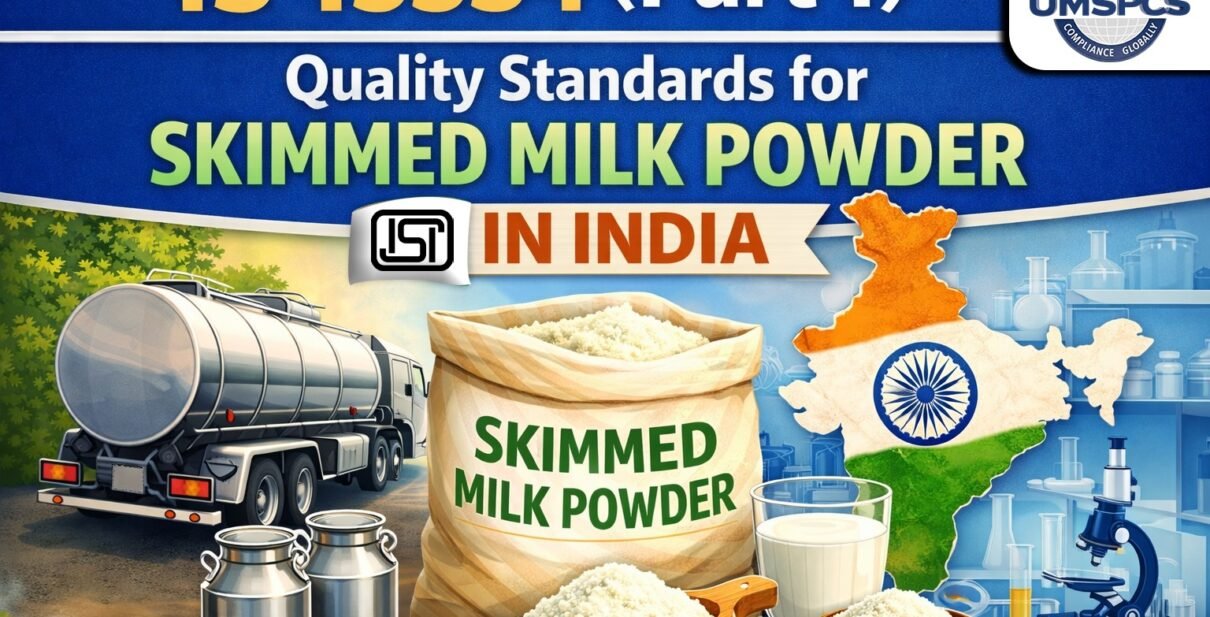
Skimmed milk powder (SMP) has become an extremely useful dairy product which can be utilised in numerous manners in the food industry. Thus, it is capable of being converted into liquid milk and then can be used in baked products, sweets, and dietary recipes. India has established specific requirements for SMP based on the Indian standards (IS) system, which safeguard buyers while ensuring the excellent quality of products. IS 13334 (part-1): standards grade constitutes one among the most essential requirements regarding these dairy items. It defines the norms regarding the way premium skimmed milk powder is supposed to be manufactured, examined, and verified the quality of product.
We’re going to discuss everything that this norm represents which consists of IS 13334 (Part 1): Quality Standards for Skimmed Milk Powder in India, reasons why it is important, and the way businesses are able to ensure that they stick to it through this blog. This also addresses how a professional consultant like UMSPCS can assist you to follow the rules.
What Is Skimmed Milk Powder?
When you separate the water and fat away from the fresh milk, you are left with skimmed milk powder, that is the dried version of milk. What has been left is primarily the solids of milk, and these contain significant elements like lactose, milk proteins, and minerals.
SMP is an essential component for the production of dairy goods as well as food due to its persistence for an extended period, has become readily available to store, and is capable of being implemented in numerous applications.
Overview of IS 13334 (Part 1): Standard Grade
There are various elements to IS, and Part 1 addresses the Standard Grade of skimmed milk powder. This standard states that:
- Requirements for raw materials
- Instructions for making things
- Parameters of both the body and the mind
- Microbiological restrictions
- Standards for packaging as well as labeling
The standard refers to skimmed milk powder sourced from cow’s milk, buffalo’s milk, or a mixture of both types of milk.
Our aim is to establish for everything that is produced is secure, nutritious, without any chemical compounds, and secure for consumers to digest.
Key Specifications Under IS 13334 (Part 1)
1. Physical Requirements
The standard demonstrates what the senses and physical attributes correspond to:
Looks: Uniform, fine powder with no large particles
Colour: White or light cream with a small amount of green
Taste and Flavour: Fresh and pleasing without an acidic, bitter, or burned flavour.
Liberty from contaminants: There must be no obvious dirt or other substances that do not belong anywhere.
These requirements make sure that the product should have excellence quality and is also accepted by consumers.
2. Chemical Requirements
The makeup of chemicals is a crucial component of the standard. A few significant variables are:
- Moisture: 4.0% at most
- Maximum milk fat: 1.5%
- All milk solids: At least 96%
- Minimum protein (on a dry basis): 34%
- Overall ash content: inside the boundaries authorised
- Acidity (such as lactic acid): maintained below established boundaries
Keeping the moisture level low can help the food to be fresh for a longer period and prevent the growth of microbes. The fat limits show that the product has now become skimmed.
3. Microbiological Requirements
IS 13334 (Part 1) is primarily regarding food safety. The product has to satisfy microbiological standards, such as:
- The total plate count is within the allowed range.
- No coliform bacteria present
- No pathogenic organisms like Salmonella are present.
To accomplish these requirements, extreme cleanliness throughout production and adequate storage conditions must be maintained.
4. Manufacturing and Hygiene
Before being dried, the milk is required to be newly harvested and correctly pasteurized before being used. For the sake of keeping everything clean, the manufacturing process needs to comply with sanitary rules. The plant environment and equipment are required to meet food safety standards.
5. Packaging and Marking
Packaging for skimmed milk powder needs to be fresh, resistant to moisture, and appropriate for food. Proper labeling must include the following:
- Name of the product
- Number of batches
- Date of manufacture and expiration
- Weight net
- Information about the maker
- Instructions for storage
If it possesses the ISI mark, this indicates that the product corresponds to BIS standards and is certified.
Importance of IS 13334 (Part 1)
1. Consumer Safety
The standard continues to keep customers safe from products that are fake or of poor quality. It assists in making sure that people can safely eat through imposing limitations on chemicals and microbes.
2. Market Credibility
Manufacturers whose work conform to BIS standards have become more dependable in domestic as well as global markets. Certification generates a brand increasingly valuable and profitable.
3. Regulatory Compliance
Quality control orders might ask for you to stick to BIS standards in some cases. If you don’t follow the rules, you could face fines, recalls of products, or worse, lawsuits.
4. Export Opportunities
Following Indian standards also assists to obtain export approvals due to numerous nations who purchase goods from India must provide strict quality documentation.
BIS Certification for Skimmed Milk Powder
For receiving the BIS Certification for Skimmed Milk Powder with IS 13334 (part-1): manufacturers are required to fulfill the followings:
- Submit application for BIS
- Product samples should be tested only in labs approved by the BIS
- Go thorough factory audits.
- Shows the work of quality control orders.
- Obtain certification after getting approval of the verification test.
This procedure might seem difficult to you as a fresh manufacturer, which consists of the technical documentation testing of products, and working in line with the required regulations.
How UMSPCS Can Help
The IS 13334 (Part 1): Quality Standards for Skimmed Milk Powder in India might seem difficult to get a BIS certification without getting any expert assistance.
UMSPCS supports companies through:
- BIS testing coordination with the approved labs
- Complete documentation preparation
- BIS portal filing and application management
- Factory inspection preparation & support
- Query handling and follow-ups with BIS
- License grant assistance
- Renewal, amendment & surveillance support
UMSPCS works with Indian manufacturers, importers, and foreign manufacturers, ensuring faster approvals and zero compliance risks.
Read more also: BIS Certificate for Foreign Manufacture
In Conclusion:
IS 13334 (Part 1): Bis Certificate for Skimmed Milk Powder in India as it is a necessary ingredient of dairy items, as it is used in various sectors of food. To ensure the quality, safety and consistency, IS 13334 (part-1): standard grade, which offers an extensive structure that covers physical, chemical, microbiological, and requirements for packaging.
Using this standard, compliance will not only protect consumer health but also boosts company’s image and market credibility. For manufacturers who’re aiming to receive a ISI certification smoothly and effortlessly, expert experienced compliant assistance is what we get from professional consultants like UMSPCS who help in making the whole procedure streamlined.
According to these standards, which are not only about meeting regulations but it is also about building trust among consumers, excellent quality, and giving safe products to consumers.
Frequently Asked Questions (FAQs)
- What is IS 13334 (Part 1)?
The Bureau of Indian Standard holds the responsibility of this IS 13334(part-1), which is required for standard grade skimmed milk powder.
- What is the maximum fat limit?
Maximum of 1.5% milk fat.
- What is the moisture limit?
Maximum of 4.0% moisture.
- Is microbiological safety required?
Yes. It is important for the product not to contain any bacteria like the salmonella and coliforms.
- Is BIS certification mandatory?
It is based on the existing quality control orders where manufacturers must verify the requirements of regulatory.
- How can businesses get certification easily?
UMSPCS provides complete assistance in preparing documentation, testing of the product, and procedures approved by the BIS.
❓ Ask a Question
Have any doubts? Fill the form below and our team will respond shortly.