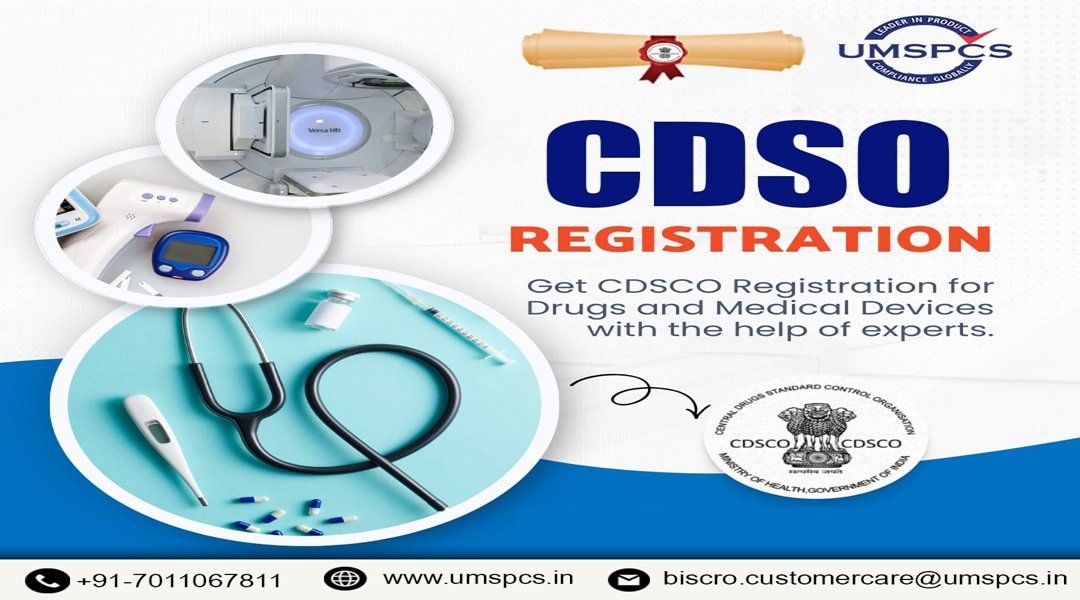
India’s medical device manufacturing sector has been expanding quickly as a result of expanded global trade, innovations in technology, and growing healthcare demand as well. Still, medical devices have strict regulations since they may have an immediate impact on the safety of patients. Under the Ministry of Health & Family Welfare, the Central Drugs Standard Control Organisation (CDSCO) is the national body in accountable for regulating pharmaceuticals and medical equipment in India.
A CDSCO license must be implemented if you are going to produce, import, or distribute medical devices in India. This blog describes the CDSCO license for medical devices includiing what conditions are needed, the licensing procedure, and how qualified assistance can make compliance less difficult.
What is a CDSCO License?
In response to the Medical Device Rules of 2017, a CDSCO license is a legal document that permits companies to lawfully produce, import, or market medical devices in India. Before a device becomes available in the market, the regulation checks to make sure it meets all the necessary quality, safety, and functionality requirements.
Businesses face fines, product seizures, or bans as long as they don’t have the appropriate permits. As a consequence, regulatory compliance is an essential business necessity rather than simply a legal formality.
Classification of Medical Devices in India
In India, medical devices are categorised according to their type of danger. Regulatory scrutiny, documentation, and the approval process are all affected by the classification.
- Class A (Low Risk): Basic tools and dressings for surgery
- Class B (Minor to Medium Risk): suction devices and needles
- Class C ( Medium to High Risk): breathing machines and infusion devices
- Class D (High Risk): Implantable equipment and cardiac valves
More rigorous assessment, including complete technical information and clinical proof, must be undertaken for more dangerous devices.
Types of CDSCO Licenses
Different licenses apply depending on the information you collect for a living:
1. Import License (Form MD-14 / MD-15)
Before offering gadgets in India, foreign manufacturers are required to apply for a license to import them. Regulatory matters need to be dealt with by an Authorised Indian Representative (AIR).
2. Manufacturing License (Form MD-3 / MD-5)
A manufacturing license are required to be filed by Indian manufacturers:
- For general medical devices, MD-3
- For experimentally diagnostic (IVD) devices, MD-5
Device classification establishes the source of approval (State Authority for Class A & B, CDSCO for Class C & D).
3. Wholesale or Distribution License
This license, which is given out by the State Drug Control Authority, must be acquired for companies that distribute medical devices in India.
Mandatory Requirements for CDSCO Licensing
Applicants have to perform several requirements to be approved:
1. Quality Management System (QMS)
A certified Quality Management System needs to be put in place by manufacturers. ISO 13485 certification must be achieved for a large number of approved devices. This promises that the manufacturer operates according to global standards for risk management and quality.
2. Technical Documentation
- It is important to submit an extensive technical paperwork that includes:
- Summary of the device and its intended use
- Information on the design and manufacturing
- Information on performance and safety
- Risk assessment (according to ISO 14971)
- Details of the packaging and labelling
Among the most frequent causes of mistakes is insufficient or incorrect documentation.
3. Clinical Evaluation Data
Clinical evidence must be implemented for Class C and D devices. This could consist of:
- Clinical literature published
- Reports from clinical investigations
- Data from surveillance after the market
4. Free Sale Certificate (for imports)
A Free Distribution License from the country of manufacture, which confirms the product’s permitted sale in that nation, is frequently required for imported devices.
5. Authorised Indian Representative (AIR)
An AIR needs to be appointed by foreign manufacturers to manage after-market monitoring, compliance with regulations, and interaction with the CDSCO.
CDSCO Application Process
Usually, the registration procedure consists of the following steps:
- Identify the device’s classification
- Create technical documentation.
- Create an account on the CDSCO SUGAM website.
- Send in your application along with the required government fees.
- Answer questions or fulfil inspection requirements.
- Getting approval of license.
Schedules might vary, while high risk devices might demand extra time due to the comprehensive review and examination, lower risk equipments can get ready in a few months.
Common Difficulties Faced During the CDSCO Approval
Many manufacturers face difficulties due to:
- Improper identification of the device.
- Incomplete files of technology.
- Lack of clinical proof.
- Incorrect information submission to the SUGAM portal.
- Delayed ISO certification.
Several businesses choose to work with skilled professional consultants to get an effortless procedure for approval due to regulatory compliance demands and technical expertise.
How UMSPCS Can Help
It is challenging for newly arrived manufacturers or international companies who wants CDSCO license, which is necessary forthe Indian market. This is where you need to appoint an expert consultant like UMSPCS.
CDSCO license for a medical device can be implemented completely by UMSPCS one of the best BIS Consultant Service providers in India. The highlights of their offerings are:
- Identification of devices and regulatory approach
- Creating technical dossiers
- Registration and submission on the SUGAM portal
- Assistance with import and manufacturing licenses
- Guidelines for ISO certification
- Managing inquiries and following up with CDSCO
UMSPCS works with companies in reducing approval delays and guaranteeing complete compliance with Indian regulations because of its regulatory expertise and practical experience.
In Conclusion
A CDSCO license for medical devices is way more than just a legal requirement. It provides validation to your products that if it meets all the required safety and quality requirements imposed by India. If you have an understanding of the device category, the needed documentation, certification of quality, and the process of getting a license.
Working together with a professional consultant like UMSPCS, which provides fast approvals, reduces the chance of rejection, and simplifies the process even more for you. In India, long term success can be maintained by expanding the medical device market based on proper adherence to CDSCO regulations. Regardless of whether you are a manufacturer or someone who’s aiming to import products legally from a foreign country.
Frequently Asked Questions (FAQs)
- Q. Is a CDSCO license compulsory in India for medical devices?
A- Yes. A CDSCO license is compulsory for all listed medical devices before manufacturing, importing, or offering them in India, under the Medical Devices Rules, 2017.
- Q. Who controls the medical devices in India?
A- The Central Drugs Standard Control Organisation (CDSCO) is in charge of Indian medical devices with the Ministry of Health & Family Welfare.
- Q. How much time does it take to obtain a CDSCO license?
A- Timing to receive a CDSCO license depends on device class and the quality of documentation. Class A and B devices can take a few months, whereas class C and D devices might take longer because of their detailed inspection.
- Q. Is ISO certification necessary for the CDSCO approval?
A- Yes. Several manufacturers require ISO 13845 certification regarding the Quality Management System demand.
- Q. Can UMSPCS help with the permit of CDSCO license?
A- Yes. A professional expert consultant like UMSPCS gives support with the identification, documentation, submission online through the SUGAM portal, and correspondence to get a smooth approval.
❓ Ask a Question
Have any doubts? Fill the form below and our team will respond shortly.