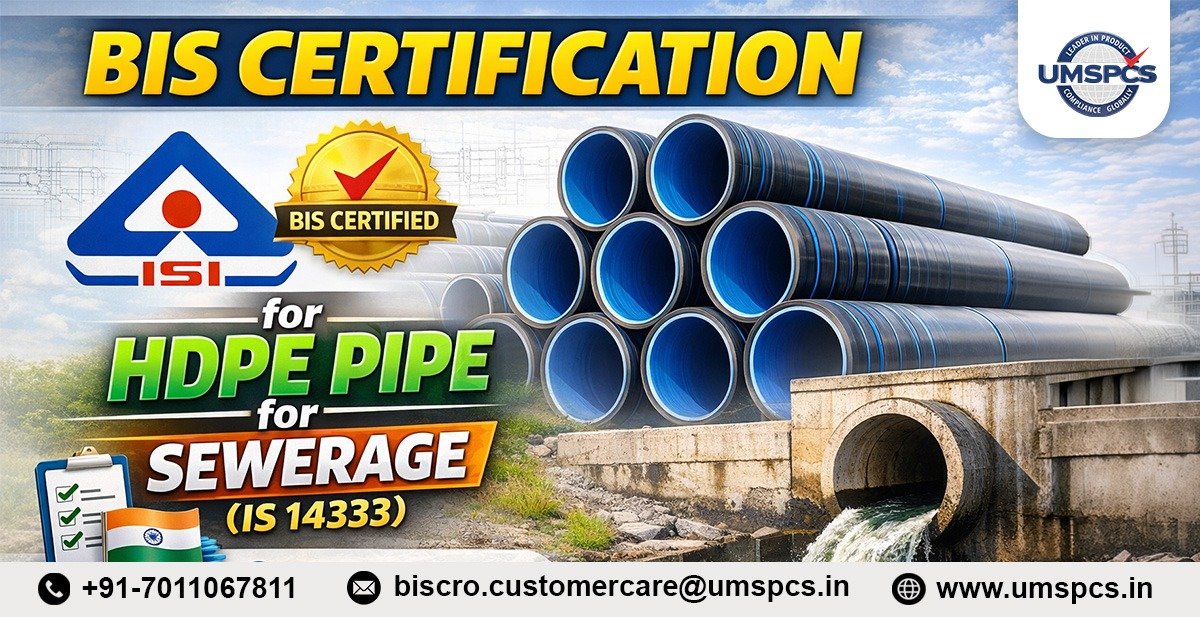
High Density Polyethylene (HDPE) pipes are now mostly used in sewerage and drainage systems as they are durable, flexible, and immune to rust. In India, such pipes are required to get in line with the IS 14333 standard which is in charge of the Bureau of Indian Standards (BIS) which gives validation to quality, security, and functionality. Manufacturers must get the BIS ISI certification in accordance with this standard if they want to distribute their HDPE sewerage pipes in India.
In this blog, we’ll look over the demands, advantages, procedure, paperwork, and charges which are required for receiving the BIS Certification for High Density Polyethylene Pipes for Sewerage as per IS 14333.
What is BIS Certification for Sewerage Pipes?
BIS Certification provides assurance to quality which make sure that the product get in line with the Indian standards of quality and safety. The ISI Mark given by BIS, shows that the product has gone through testing and verification has been done in accordance with the certain Indian Standards.
Manufacturers should get the Bis ISI Certification prior to selling HDPE sewerage pipes in India. The certification gives surety that the product follows the technical requirements define under IS 14333 and can be use safely for sewerage and drainage systems.
About IS 14333 Standard
IS 14333 is an Indian Standard which describe the requirements for polyethylene pipes which are used in sewerage, industrial chemicals, and effluent disposal systems.
The upgraded version of IS 14333:2022 is a replacement of the previous IS 14333:1996.
These pipes are formed majorly for the underground drainage and sewerage systems where the water flows with gravity.
Key Specifications Under IS 14333
Some of the primary technical requirements are consists of the followings:
- Pipes made from High Density Polyethylene (HDPE) material
- Material grades: PE 63, PE 80, and PE 100
- Suitable for sewerage, wastewater, and industrial effluent systems
- Excellent resistance to chemicals and corrosion
- Lightweight and easy installation
- Strong impact resistance and long service life
Usually the pipes ranges are from 20mm to 400mm or even larger diameter which is based upon the requirements of application.
Applications of HDPE Pipes for Sewerage
HDPE pipes approved with IS 14333 are mostly in use by numerous infrastructure projects.
Usually the application consists of the following:
- Municipal sewerage systems
- Industrial effluent disposal pipelines
- Wastewater drainage networks
- Stormwater management systems
- Underground drainage infrastructure
HDPE pipes works fine in even bad environment and also during the shift of soil conditions due to their immunity of rust and flexibility.
Benefits of BIS ISI Certification for HDPE Sewerage Pipes
Receiving the BIS ISI Certification for HDPE Sewerage Pipes gives various advantages to producers and end users.
1. Quality Assurance
The ISI mark gives surety to the product that they are in line with the technical requirements specified by the BIS.
2. Regulatory Compliance
Manufacturers need to get the BIS Certification for manufacturing or distributing HDPE sewerage pipes lawfully in India.
3. Acceptance in Government Projects
ISI approved pipes can be accepted mostly by the municipal and infrastructure projects all over the nation.
4. Increased Market Trust
Certification for manufacturer among buyers and contractors helps in boosting the market credibility and reputation of market.
5. Long-Term Performance
Approved pipes gives excellent durability, chemical resistance, and leak proof for woking in Sewerage systems.
Technical Requirements for BIS Certification
HDPE pipes should get in line with various technical and functionality requirements in prior to receiving the BIS certification.
Raw Material Requirements
The pipes should be manufactured through virgin HDFPE components which give surety to the required grades like PE63, PE80, or PE100.
Physical and Mechanical Tests
Usually these tests consists of the following:
- Density test
- Melt flow rate test
- Hydrostatic pressure resistance test
- Carbon black content test
- Heat reversion test
- Visual appearance inspection
For instance, hydrostatic pressure testing gives validation that the pipes can not fail in any certain stress conditions while using.
BIS Certification Process for HDPE Pipes (IS 14333)
The procedure of receiving BIS ISI Certification usually consists of the following steps:
1. Application Submission
The manufacturer uploads application along with the required products and factory details to the BIS.
2. Documentation Review
BIS authorities analyse the uploaded paperwork and manufacturing info.
3. Factory Inspection
BIS officials verifies the facility of manufacturers to check the procedure of quality control.
4. Product Testing
Submitting the samples of HDPE pipes to BIS approved labs for testing in accordance with IS 14333.
5. Grant of BIS License
If the product get pass in every test and examination then the BIS grants the ISI License to the manufacturer.
Documents Required for BIS Certification
BIS Certification process usually consists of the following required documents:
- Business registration certificate
- Factory license
- Manufacturing process details
- List of manufacturing equipment
- Quality control documents
- Test reports of raw materials
- Authorized signatory documents
- Product specifications and drawings
Accurate documentation helps in making the certification process smooth.
BIS Certification Fee Structure
The amount of getting the BIS certificate for HDPE pipes are based upon various of factors like product category, testing requirements, and factory audits.
Usually these costs includes the followings:
| Fee Type | Approximate Cost |
| Application Fee | ₹1,000 |
| Testing Charges | ₹25,000 – ₹50,000 |
| Inspection Charges | ₹10,000 – ₹20,000 |
| Annual License Fee | ₹1,000 |
| Marking Fee | As per BIS norms |
The total amount might differ because of the product range and testing requirements.
Timeline for BIS Certification
On an average, BIS Certification requires approx:
30–45 days
This timeline consists of an application process, factory audits, sample tets, and license approval.
Therefore, delays might rise if the documents or test reports are incorrect or incomplete.
Role of a BIS Certification Consultant in India
Getting BIS Certification can be difficult because of documentation, testing process, and regulatory requirements. BIS Certification Consultant in India can assist your businesses to get simpler process.
Professional consultants offers the following:
- Application filing support
- Product testing coordination
- Documentation preparation
- Factory audit assistance
- BIS license approval support
BIS FMCS Certification for Foreign Manufacturers
Manufacturers should get the BIS Certification for Foreign Manufacturers if they are selling polyethylene water storage tanks outside the nation or importing it into the Indian market.
The Foreign Manufacturers Certification Scheme (FMCS) enables manufacturers from foreign to get the BIS approval and sell their products into the Indian market. This procedure consists of factory audits through BIS officials and product testing in line with the Indian standards.
After the approval, foreign manufacturers are able to use the ISI mark, which gives validation to their products which is in line with the similar standards of quality like those in India.
How UMSPCS Can Help
The IS 14333 might seem difficult to get a BIS Certification without getting any expert assistance.
UMSPCS supports companies through:
- BIS testing coordination with the approved labs
- Complete documentation preparation
- BIS portal filing and application management
- Factory inspection preparation & support
- Query handling and follow-ups with BIS
- License grant assistance
- Renewal, amendment & surveillance support
UMSPCS works with Indian manufacturers, importers, and foreign manufacturers, ensuring faster approvals and zero compliance risks.
Read more also: BIS Certification for Tumbler Dryers – IS 302
Conclusion
In India, BIS Certification for High Density Polyethylene Pipe for Sewerage are a essential part of the water storage system. Following the IS 14333 and receiving BIS Certification can give surety of safety, durability, and hygiene.
The ISI certification gives validation that the water tanks are getting align with the rigid standards of quality which help in boosting trust among consumers. BIS FMCS Certification is in demand for lawfully selling these products into the Indian market for foreign manufacturers.
Through hiring experienced consultants like UMSPCS, manufacturers are able to make their certification process simpler and can have complete compliance with BIS regulations.
Frequently Asked Questions (FAQs)
- What is IS 14333?
IS 14333 is an Indian Standard which defines the requirements for HDPE pipes employed in sewerage and industrial effluent systems.
- Is BIS certification mandatory for HDPE sewerage pipes?
Yes. In India, Manufactures need to get BIS ISI Certification prior to selling these pipes
- How long does BIS certification take?
This process usually requires 30-45 days.
- What materials are used for HDPE sewerage pipes?
The pipes are produced using components like PE63, PE80, or PE100 grade polyethylene materials.
- Who can help with BIS certification?
UMSPCS, being a professional experienced consultant which helps manufacturers with BIS registration and compliance.
❓ Ask a Question
Have any doubts? Fill the form below and our team will respond shortly.